
Peptic Ulcer Treatment with Homeopathic Medicine
Ulcerations (sores) in the lining of upper part of the digestive tract are known as Peptic Ulcers. The ulcers may exist in the lower part of food pipe (oesophagus), in the stomach or in the initial part of the intestine (duodenum). About 10% of all adults are affected with Peptic ulcers at some time in their life. The incidence of Peptic ulcers is more common in males as compared to females.
Causes of Peptic Ulcer:
The underlying process that results in Peptic ulcer formation is excess of acid production in the stomach and damage to the protective barrier inside the stomach. Certain things that can trigger excess acid production or can cause damage to the protective lining of the stomach are:
The primary cause of peptic ulcers is an imbalance between the aggressive factors that can damage the lining of the digestive tract and the protective mechanisms that normally prevent such damage. Here are some of the common causes and risk factors associated with peptic ulcers:
1) Helicobacter pylori (H. pylori) infection: This bacterium is a significant cause of peptic ulcers. It can weaken the protective mucous lining of the stomach and small intestine, allowing stomach acid to damage the lining and form an ulcer. H. pylori is a common bacterial infection, and its presence
is associated with many cases of peptic ulcers.
2) Nonsteroidal anti-inflammatory drugs (NSAIDs): Long-term or high-dose use of NSAIDs, such as aspirin, ibuprofen, and naproxen, can irritate and erode the stomach lining, increasing the risk of peptic ulcers. These medications are especially problematic for individuals with a history of ulcers or those who consume them regularly without proper precautions.
3) Smoking: Smoking is a significant risk factor for peptic ulcers. It can increase stomach acid production and decrease the blood flow to the stomach lining, making it more susceptible to damage.
4) Alcohol consumption: Excessive alcohol intake can irritate and erode the stomach lining, increasing the risk of peptic ulcers.
5) Stress: While stress itself doesn't directly cause peptic ulcers, it can exacerbate the symptoms and make them more severe. Stress can lead to increased stomach acid production, which can worsen the condition.
6) Genetic factors: Some people may have a genetic predisposition to developing peptic ulcers. A family history of ulcers may increase your risk.
7) Other medical conditions: Certain conditions, such as Zollinger-Ellison syndrome (a rare tumor that causes the stomach to produce excessive acid) and hypercalcemia (high levels of calcium in the blood), can increase the risk of peptic ulcers.
It's important to note that most peptic ulcers are a result of a combination of factors. For example, someone infected with H. pylori may develop an ulcer when taking NSAIDs or due to other risk factors.
Types of Peptic Ulcers:
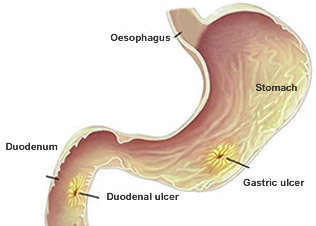 Peptic ulcers usually run a chronic course and complaints tend to be episodic in nature; the patient is usually free from the symptoms in between these episodes. Some of the common symptoms of Peptic ulcers are:
- Pain in the epigastrium (upper part of abdomen)
- Hunger pain- worsening of pain when the stomach is empty
- Night pain- wakes the patient from sleep
- Heartburn
- Water brash
-
- Loss of appetite (anorexia)
- Nausea
- Haematemesis (vomiting of blood)
- Dark or black stools
The pain is usually relieved by taking some food, milk, antacids, by belching or vomiting.
Diagnosis:
Diagnosis of Peptic ulcers is confirmed by:
- Endoscopy to evaluate ulcers
- Biopsy may be required
- Barium meal (double contrast)
- Stool examination
- Complete blood count
Complications:
- Hemorrhage
- Perforation of ulcer
- Gastric outlet obstruction (obstruction in terminal part of stomach)
Things to avoid in case of Peptic ulcer disease:
- Spicy foods, pungent things
- Excess of alcohol
- Oily foods
- Heavy meals
- Allopathic painkillers
- Above all avoid worrying!
Homeopathic treatment of Peptic Ulcers:
Peptic ulcer disease is a constitutional disease that finds its local expression at the level of the digestive system. Being a constitutional disorder, it calls for constitutional approach towards treatment. Homeopathic approach towards the management of Peptic ulcer disease involves the evaluation of the complaint in details while taking into account individual factors such as one’s personal and family history while planning a long-term treatment. Since the treatment targets the root cause, Homeopathy offers long-term cure instead of temporary relief. It treats at a deeper level of immunity and enhances the healing capacity of the body. Homeopathy can also help to prevent complications of Peptic ulcers.
Homeopathic Remedies for Peptic ulcer
Peptic ulcer could be in the duodenum (Duodenal ulcer, DU) or in the the stomach (gastric ulcer). Based on the symptoms and by endoscopy we can diagnose the location of ulcer. The homeopathic medicines for peptic ulcer are many, one has to select based on the exact diagnosis and individual symptoms; including the personally type of the patient.
Graphites: This homeopathic medicines sourced from the mineral is a powerful remedy for all kinds of ulcers in stomach, intestines, as well as on the skin. The patient may feel pain in stomach after about two hours of food, a sign of gastric ulcer, requiring Graphites. There may be dislike for sweets, sensitivity to cold air, dryness and roughness of skin, tendency to ulcer and scar formation, associated eczema or such skin disease, irregular menses in females; apart from the clinical symptoms belonging to the stomach ulcer.
Phosphorus: A popular homeopathic medicine, very effective for diseases of esophagus, stomach, jejunum, intestines and colon, this medicine works very well when indications match. Burning pain in upper abdomen, sinking feeling, emptiness in stomach, losing weight in spite of eating well, sensitive to cold air, kind hearted personality, cares for others, friendly and talkativeness, etc. are some of the features indicating the need for Phosphorus.
Nux vomica: This remedy is often used for individuals with excessive stress, a sedentary lifestyle, and overindulgence in spicy foods and alcohol. It may help with symptoms such as heartburn, belching, and bloating.
Arsenicum album: It's recommended for people with burning stomach pain, especially when the pain is relieved by sipping warm liquids.
Lycopodium: This remedy may be helpful for individuals who have bloating and a sensation of fullness soon after eating, along with symptoms like belching and flatulence.
Robinia pseudoacacia: If you experience burning, acrid burping and regurgitation of sour or acidic fluid, this remedy may be considered.
Carbo vegetabilis: This remedy might be suitable for people who have persistent bloating and flatulence with a feeling of heaviness and discomfort in the stomach.
Peptic ulcer homeopathic treatment, remember that homeopathy is a holistic approach, and the choice of remedy is based on the individual's overall health and symptom profile. It's essential to work with a trained homeopathic practitioner who can determine the most appropriate remedy for your specific condition.
While some people may find relief from their symptoms with homeopathic remedies, it's essential to continue following your doctor's advice and take prescribed medications if you have been diagnosed with a peptic ulcer. Untreated or poorly managed peptic ulcers can lead to serious complications, such as bleeding or perforation, so medical supervision is crucial.
Written & Approved by-
Dr. Rajesh Shah
M.D. (Hom.)