Homeopathic Treatment for Hepatitis B
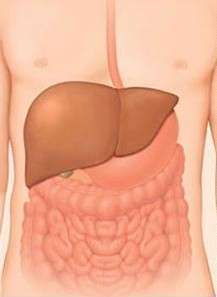
Hepatitis B is a viral infection caused by the Hepatitis B virus (HBV). This virus is capable of causing life-long infection, liver cirrhosis (scarring), liver failure, liver cancer, and death.
Causes:
As mentioned above the cause of Hepatitis B is the virus- HBV. The virus spreads when blood from an infected person enters the body of a non-infected person. This virus enters the bloodstream and reaches the liver where it reproduces and releases large numbers of new viruses into the bloodstream. HBV can survive outside the body for at least 7 days and can still be capable of causing infection.
HBV is mainly found in the blood of infected individuals. Saliva, semen, vaginal secretions and breast milk also contain the virus but in lower concentrations as compared to the blood. Feces, nasal secretions, sputum, sweat, tears, urine, and vomit have not been implicated in the spread of Hepatitis B. Unless they are visibly contaminated with blood, the risk of contracting hepatitis B from these fluids is practically nonexistent. Hepatitis B is not transmitted by casual contact, hugging, by sharing eating utensils, through food or water, etc.
After a person has been exposed to the HBV, the blood test (HBsAg) will become positive on an average of 4 weeks (range 1- 9 weeks). Usually, within 15 weeks of the onset of the symptoms, this test becomes negative in most individuals (except those who have developed chronic infection).
Risk factors for developing Hepatitis B:
- Sexual contact with an infected individual
- Sexual contact with multiple partners
- Male homosexual contact
- Intravenous drug abuse (due to the sharing of infected needles)
- Health care workers (due to close contact with infected individuals)
- Occupational blood exposure
- Sharing toothbrushes, razors, etc
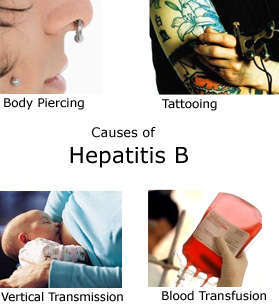
- From an infected mother to the new-born infant
- Chronic renal failure patients on Dialysis
- Tattooing, piercing of skin (ears, lips, navel, etc)
- Dental procedure
- Medical procedures (including transfusion of blood or blood products)
- Staying with a chronic Hepatitis B patient
- Traveling to countries that have a high prevalence of Hepatitis B
It must be noted that people of any age, sex, race or nationality can be infected by this virus.
Symptoms:
Sometimes a person with HBV infection may not have any symptoms at all. In patients who do develop symptoms, they occur on an average of about 12 weeks (range 9-21 weeks) after exposure to the hepatitis B virus. About 70% of the patients develop symptoms of Hepatitis B. The symptoms include:
- Jaundice: Yellowness of skin and/or sclera (white portion of the eyes)
- Loss of appetite
- Abdominal discomfort
- Nausea with or without vomiting
- Dark yellow urine
- Clay-colored stools
- Lethargy, fatigue
- Body ache, joint pain, etc
About Chronic Hepatitis B infection:
Chronic Hepatitis B means that the body did not get rid of the virus when the patient was first infected with HBV thus leading to long-term HBV infection. The younger the age group at the time of the first infection with this virus, the higher is the chance of developing chronic HBV infection. Thus almost 90% of infected infants, about 30% of infected children between 1-5 years of age and only 2- 6% of infected people above 5 years of age will develop chronic infection.
Carriers of Hepatitis B are those individuals who are capable of transmitting the virus to other individuals. The majority of hepatitis B carriers are asymptomatic (displaying no symptoms) whereas only 30% of them show symptoms of the disease.
Diagnosis:
Following are some of the common tests used to diagnose Hepatitis B infection:
Hepatitis B Surface Antigen (HBsAg): It can be detected in high levels in serum during acute or chronic hepatitis. The presence of HBsAg indicates that the person is infectious.
Hepatitis B Surface Antibody (anti-HBs): The body normally produces antibodies to HBsAg as a part of the normal immune response to infection. The presence of anti-HBs is generally interpreted as indicating recovery and immunity from HBV infection. Anti-HBs also develops into a person who has been successfully vaccinated against hepatitis B.
Hepatitis B e Antigen (HBeAg): This is found in the serum during acute and chronic hepatitis B. The presence of Hepatitis B envelope antigen (HBeAg) indicates that the virus is replicating and the infected individual has high levels of HBV.
Hepatitis B e Antibody (anti-HBe): This is produced by the immune system temporarily during acute HBV infection.
Hepatitis B core antibody (anti-HBc) This is an antibody to the hepatitis B core antigen. The core antigen is found on virus particles but disappears early in the course of infection. This antibody is produced during and after an acute HBV infection and is usually found in chronic HBV carriers as well as those who have cleared the virus, and usually persists for life.
Hepatitis B tests interpretation
Negative
Negative
Negative
Susceptible to Hepatitis B infection
Negative
Positive
Positive
Immune due to natural infection
Negative
Negative
Positive
Immune due to Hepatitis B vaccination
HBsAg
anti-HBc
IgM anti-HBc
anti-HBs
Positive
Positive
Positive
Negative
HBsAg
anti-HBc
IgM anti-HBc
anti-HBs
Positive
Positive
Negative
Negative
Negative
Positive
Negative
* 4 Interpretations possible
* 4 Interpretations possible
1) Patient might be recovering from acute HBV infection
2) Patient might be immune and the test may not be sensitive enough to detect very low level of anti-HBs in serum
3) Patient might be susceptible and maybe having a false positive anti-HBc
4) Patient may be actually chronically infected and maybe having undetectable levels of HBsAg in the serum
Complications of Hepatitis B: These include the following:
Chronic hepatitis
Cirrhosis
Liver failure
Hepatocellular carcinoma
Homeopathic Treatment:
Homeopathy is known to work at the immunological level and has proven its efficacy in the treatment of a wide range of viral infections. With homeopathic medicines, the cases of Hepatitis B are better controlled, the process of cirrhosis is well kept under check and symptomatic relief is also obtained very well. Homeopathic treatment can also help in delaying the complications of Hepatitis B (such as cirrhosis and liver cancer) as far as possible. It may also be noted that the treatment for chronic Hepatitis B has to be planned for a longer duration of time. The best part of homeopathic treatment is that the disease is kept under control and general health improved without any kind of side-effects whatsoever.
Written & Approved by-
Dr. Rajesh Shah
M.D. (Hom.)