Mumbai Mirror
http://www.mumbaimirror.com/others/health/FAQs-fiction/articleshow/15972042.cms
Homeopathic remedies are nano-medicines administered in micro doses to stimulate the body’s healing powers. These remedies contain potent energies, which treat the symptoms and cure the diseases at a deeper level.
Is homeopathy a scientific theory? How does it differ from herbal medicine or Ayurveda?
The major difference is that homeopathy does not use any material substance. It treats the underlying causes of illness rather than addressing outward symptoms. Herbal medicine is based on the use of pure constituents from plants and the biological response varies directly to the dose or concentration of the remedy. Ayurveda, a more traditional (and older) treatment, uses various alternative forms of healing such as herbs and chemicals along with physical elements such as yoga and massage. Many believe homeopathy is quacks' theory but FYI, it’s supported by WHO and practiced in over 100 countries. It is approved by the US, European FDA, and the Indian DCGI.
So does homeopathy cure it all? For what ailments would you NOT recommend homeopathy?
Diseases can be divided into two categories to understand the scope of homeopathy:
Chronic and recurring: Homeopathy is very effective in these cases and has had considerable success in their treatment (asthma, vitiligo, psoriasis, migraine, eczema and so on).
Acute and critical: Homeopathy is less effective in cases requiring urgent attention. Also, the critical nature of conditions such as a heart attack, high fever, severe attack of asthma, severe infection would warrant allopathy.
Also, I do not prescribe homeopathy in cases such as malaria, typhoid, and TB as these diseases take long to be treated and usually, allopathy fares better. Homeopathy has its own set of limitations, as does allopathy.
I want to take other medications while my homeopathic treatment is underway.
Absolutely. Homeopathy, in some cases of diabetes, asthma, arthritis, ulcerative colitis, can be married to allopathy and help in successfully managing the ailments. It is a wrong notion that homeopathy cannot be used in conjunction with other therapies.
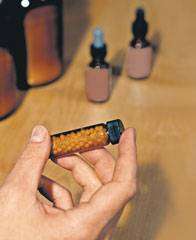 In our unregulated homeopathy market, how do I trust homeopathic products from my local health food store? How do I even trust a doctor?
The Government of India currently manages over 200 homeopathy medical colleges but fails to regulate the thousands of homeopathic manufacturing units. Regarding the products, one needs to look out for properly labeled products. The chances of them being phony these days are low if it is a reputed health food store.
A homeopath is just like any other doctor. His qualifications would be the same as those of an allopathic doctor. So, the way one chooses their allopathic doctor (referrals, word of mouth, qualifications, etc), is the same for the manner in which one would choose a homeopathic doctor.
Allopathy would give me a quicker solution, right?
That homeopathy takes long to cure an ailment is not completely true. Since science is popular for treating chronic (long-standing) diseases, they obviously take time to be cured. For a given nature of the disease, for instance, asthma, homeopathy may take a year-and-half to give lasting results. However, this period is too small compared to many years of suffering if homeopathy is not opted for.
For quick solutions, one must opt for homeopathy in the early stage of diseases such as allergies, asthma, eczema, urticaria, ankylosing spondylitis, migraines, etc. If you approach homeopathy as a last resort, it might take longer to take effect because of your already weakened system.
What precautions do I take and which side-effects do I consider while taking homeopathy?
Homeopathy has no side-effects if professionally prescribed. Contrary to myths, it is extremely rare that a disease intensifies before getting cured.
My relative tried homeopathy once didn't see a cure and gave up on it. Would it fail on me too?
No system of medicine works all the time. The success or failure of any medicine (including homeopathy) depends largely on the nature of the disease, the body’s response to medicine and the strength of the medicine.
(Dr Rajesh Shah is MD of Life Force, a Homeopathy portal & editor, Homeopathy Times)
 Medicina Futura NJH Clever Holland Mumbai Mirror The Homeopath Keralite magazine Italian Journal Vital informer
Written & Approved by-
Dr. Rajesh Shah
M.D. (Hom.)